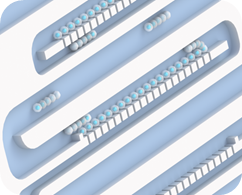
Yao Chu's work on "Human Pulse Diagnosis for Medical Assessments Using a Wearable Piezoelectret Sensing System" is reported by Sohu and other news (November, 2018)
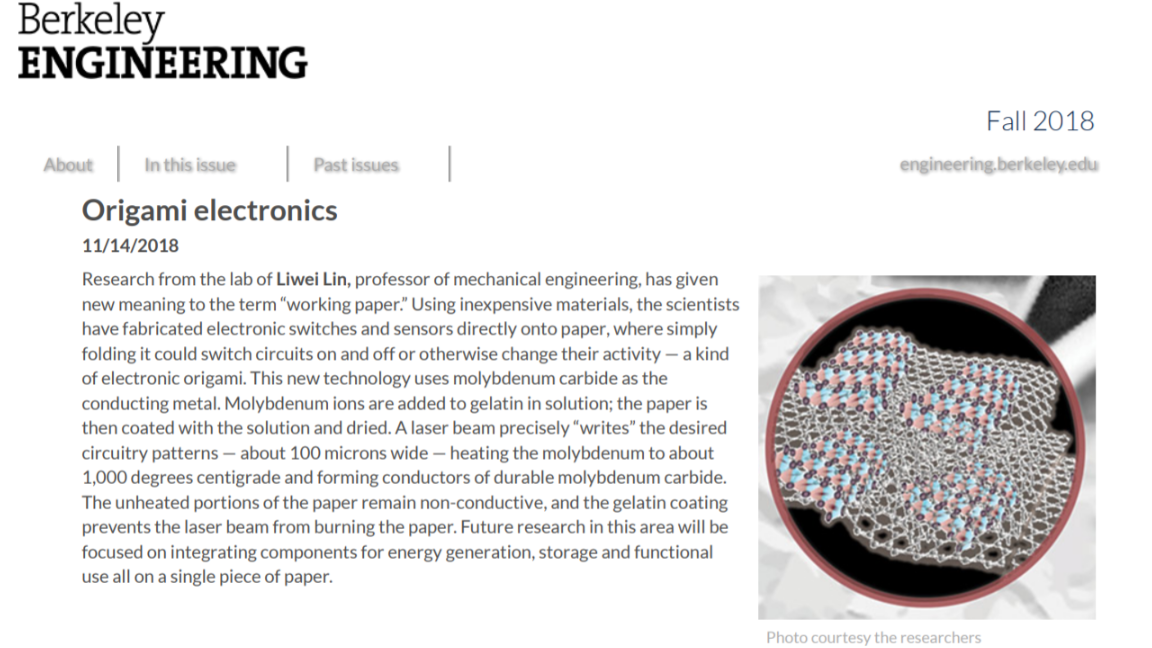
Xining Zang's work on "Direct-laser-write Metal Carbide for Paper Electronics" is reported by Berkeley Engineering Magazine (November, 2018)
Takeshi Hayasaka, et al.win best poster award for their project "Graphene for Room Temperature Gas Sensors," at BSAC IAB (September, 2018)
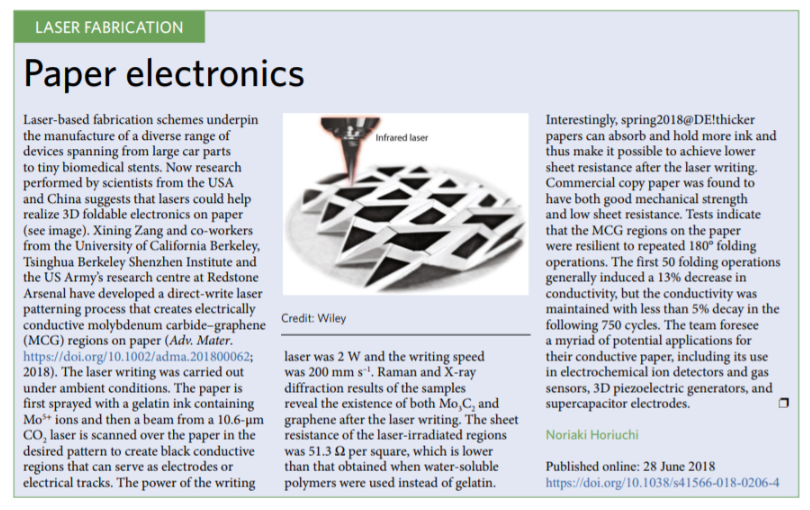
Xining Zang's work on "Direct-laser-write Metal Carbide for Paper Electronics" is reported by Nature Photonics (July, 2018)
Ben Eovino wins best presenter award for his project "Dual-Electrode Bimorph Ring-Shaped PMUTs: Design and Application," at BSAC IAB (March, 2018)
Huiliang Liu, Takeshi Hayasaka, et al. win best poster award for their project "Graphene for Room Temperature Gas Sensors," at BSAC IAB (March, 2018)
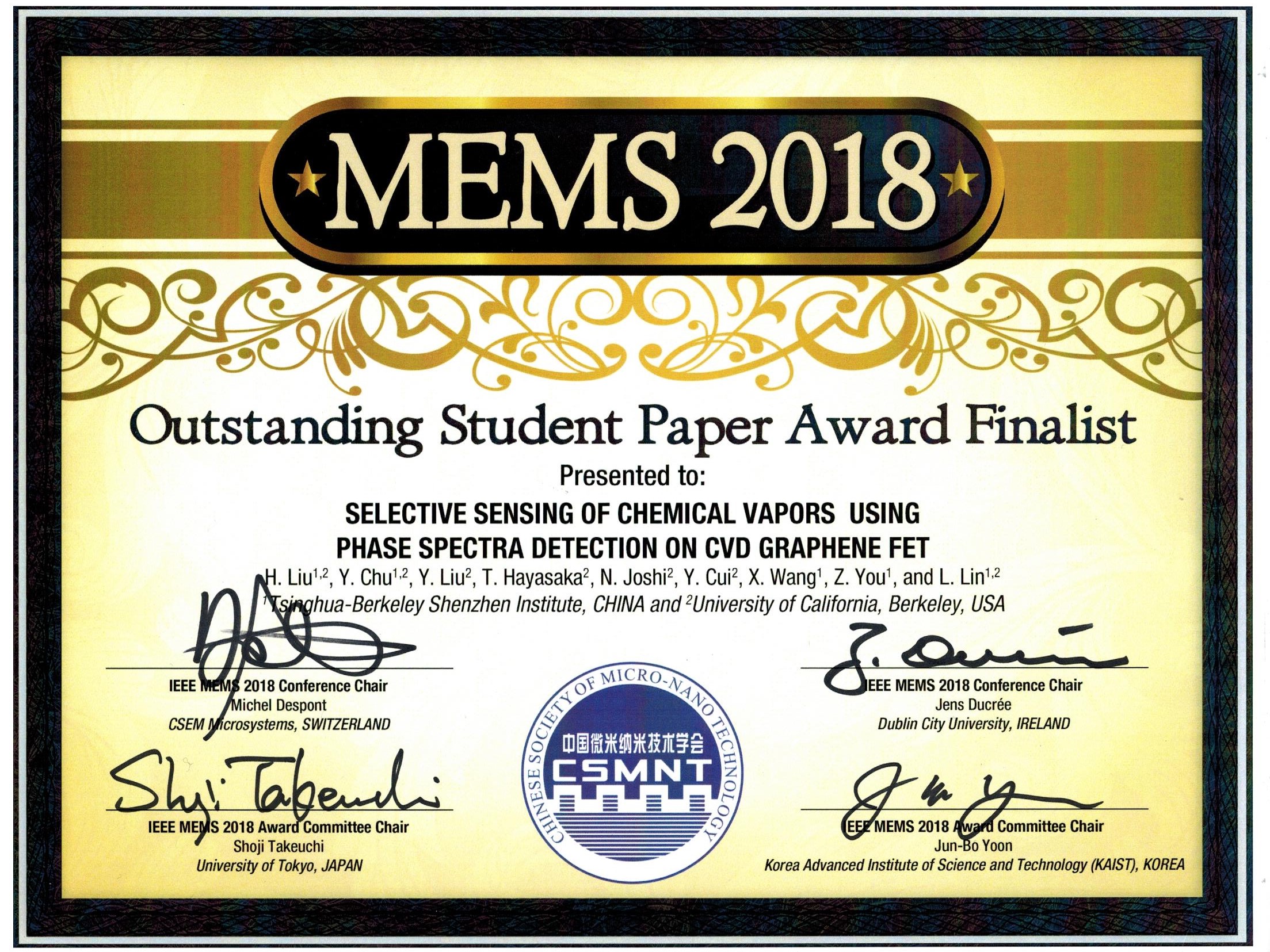
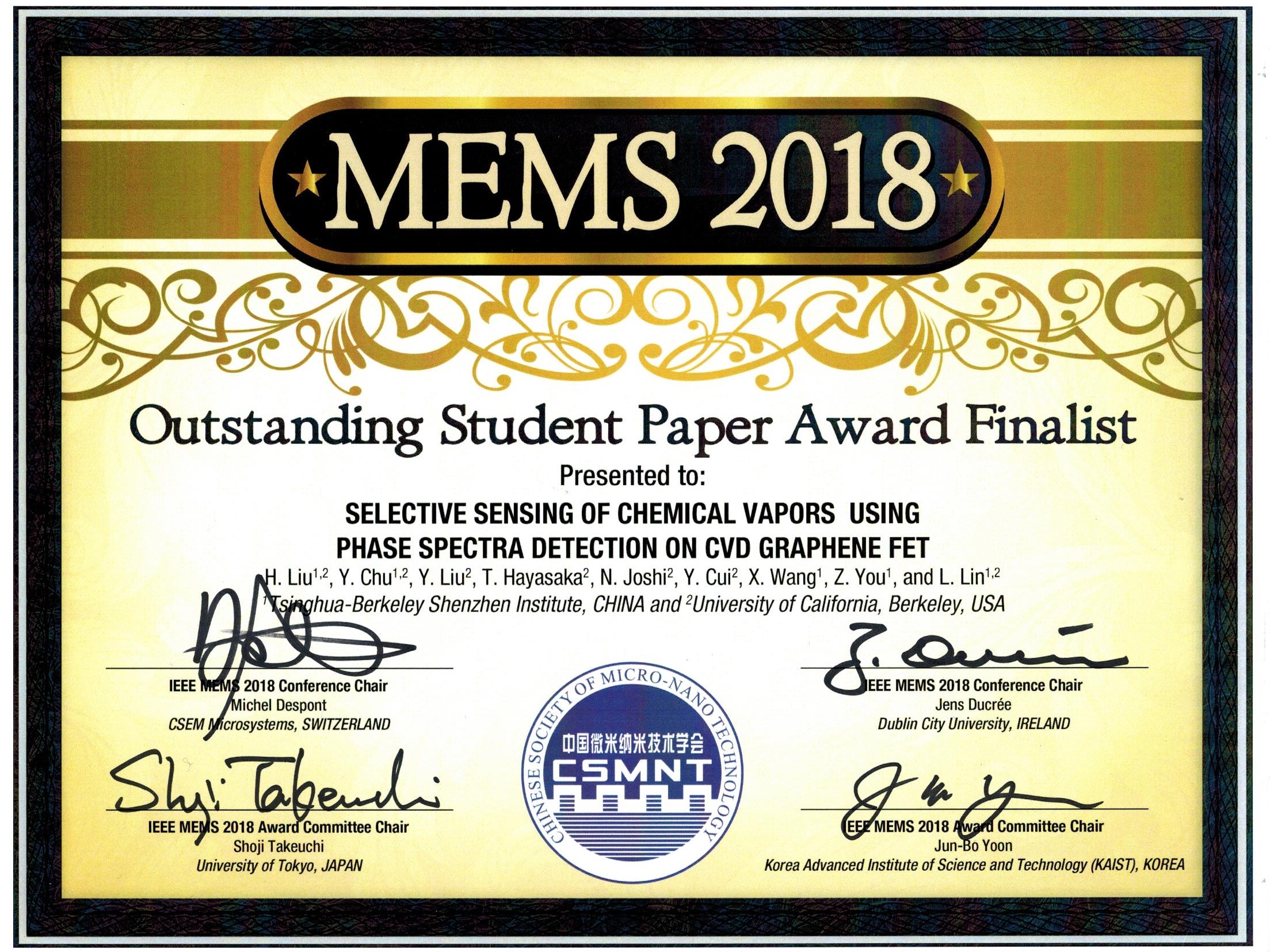
Huiliang Liu and Emmeline Kao are nominated as "Outstanding Student Best Paper Award Finalist" for their papers of "Selective Sensing of Chemical Vapors using Phase Spectra Detection on CVD Graphene FET," and "A Novel Approach to Black Titania Fabrication via Atomic Layer Deposition for Energy Storage," respectively in the 2018 MEMS Conference at Belfast, North Ireland, (January, 2018)
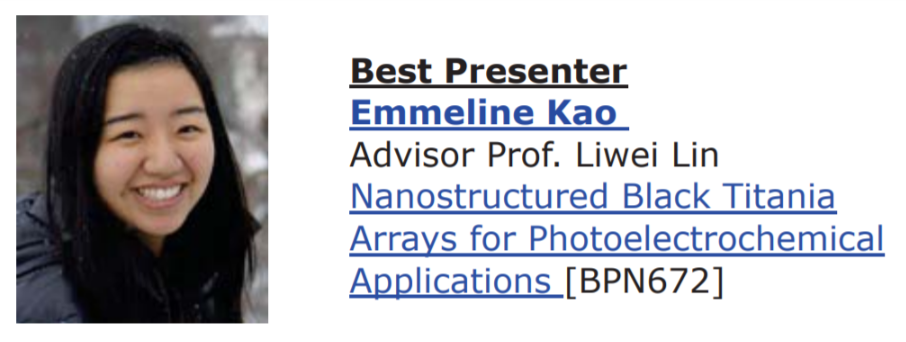
Emmeline Kao wins best presenter award for her project "Nanostructured Black Titania Arrays for Photoelectrochemical Applications" at BSAC IAB (September, 2017)
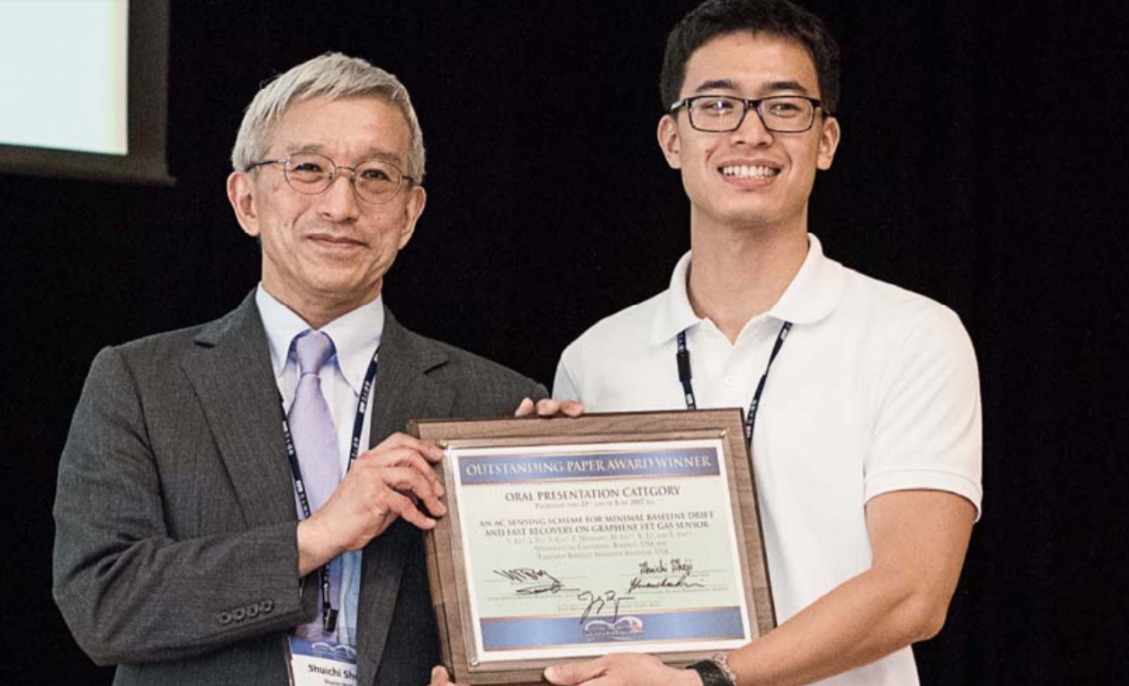
Yumeng Liu et al. win best paper award for their paper "An AC Sensing Scheme for Minimal Baseline Drift and Fast Recovery on Graphene FET Gas Sensor" at the 19th International Conference on Solid-State Sensors, Actuators and Microsystems at Kaohsiung, Taiwan (June, 2017)
Junwen Zhong et al. win best poster award for their project "Flexible Sensors and Energy Harvesters" at BSAC IAB (March, 2017)

MEMS 2017 Conference Best Paper Award Winners!
The Lin Lab and M3B Program are proud to announce that the project entitled "3D Printed, Three-Flow Microfluidic Concentration Gradient Generator for E.Coli-Antibiotic Drug Screening" won the Best Student Paper Award at The 30th IEEE International Conference on Micro Electro Mechanical Systems (MEMS 2017) in Las Vegas, NV (January 22-26, 2017)!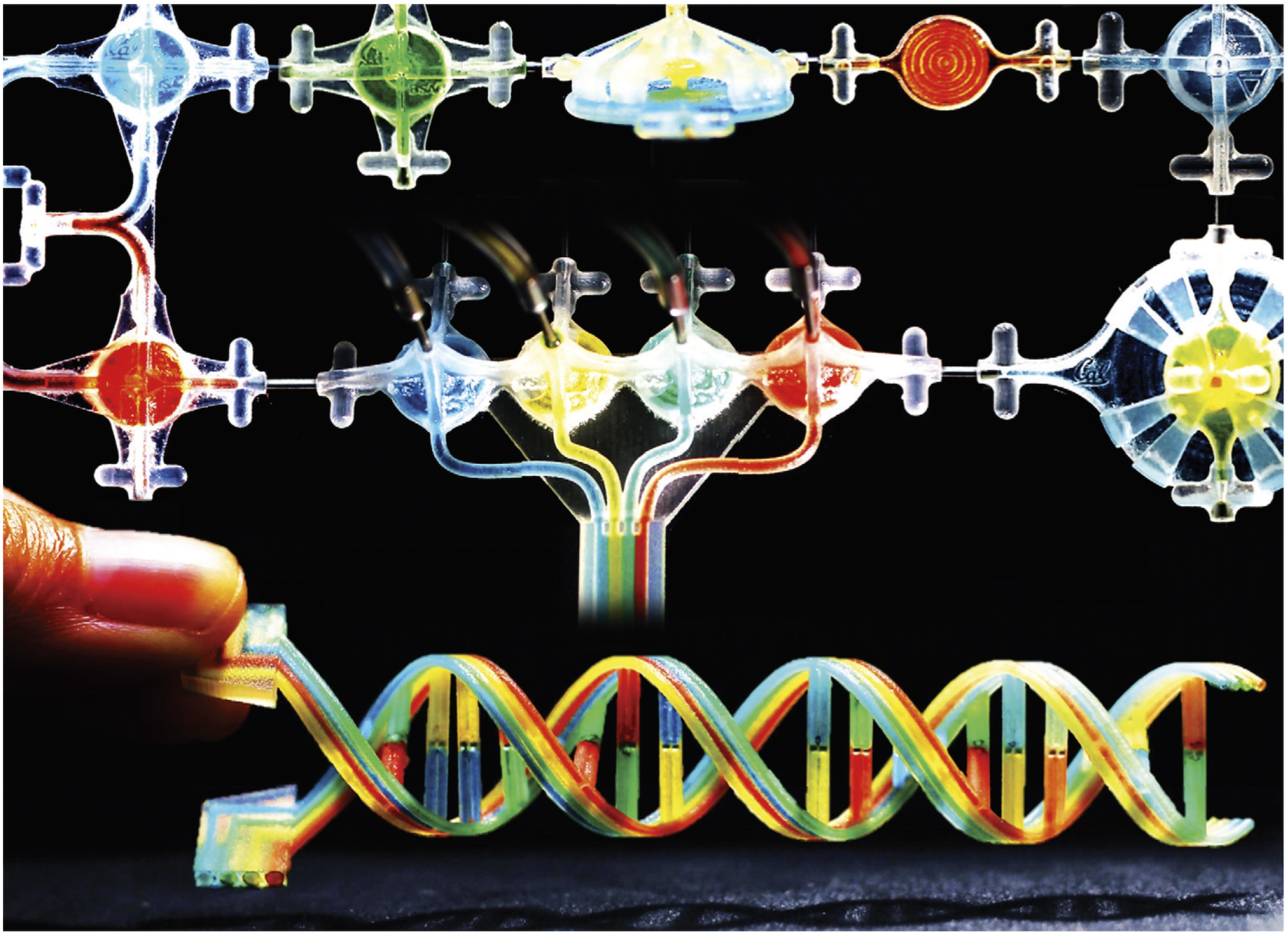
Microfluidics via Additive Manufacturing
The M3B Program - a division of the Liwei Lin Lab - performs various cutting-edge microfluidics research at the confluence of mechanical and biological engineering for biomedical applications. Our research primarily entails the exploration of 3D printing as an alternative (and advantageous) manufacturing method for microfluidic devices.Carbon nanotube (CNT) forests were grown directly on a silicon substrate using a Fe/Al/Mo stacking layer which functioned as both the catalyst material and subsequently a conductive current collecting layer in pseudocapacitor applications.
Energy Storage and Harvesting
Carbon nanotube (CNT) forests were grown directly on a silicon substrate using a Fe/Al/Mo stacking layer which functioned as both the catalyst material and subsequently a conductive current collecting layer in pseudocapacitor applications...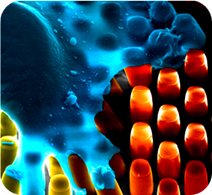
Micro/Nanoengineered Platforms for Cell Mechanobiology
Microenvironmental mechanical cues influence diverse cellular processes, such as cell migration, cell morphology, and stem cell fate decisions. In our lab, we use mechanical engineering methods and micro/nanofabrication processes to create novel technologies at scales that are biologically relevant and advantageous for studying and controlling cellular functions.